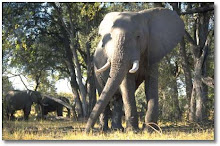
SAFARI HOLIDAY IN MASAI MARA
Our journey starts upon arrival in Jomo Kenyatta International Airport. We are taken to the hotel where we spend our first night in Nairobi the capital city of Kenya. The city is crowded during the day and noisy especially from the traffic. But the uptown of Nairobi is a bit calm and the perfect place for your rest.
Early the next morning we start our safari to Masai mara national park. Kabiro is our driver and guide in the next 3 days we will be in Masai mara.Our drive takes us to the south along the floor of the Great Rift Valley with wonderful scenery and perfect place to take loits of pictures. We take a break at Narok Town for our lunch and then climb the western wall entering Hemmingways Country of the "Serengeti Plains". We arrive in Masai mara late afternoon in Masai mara with a game drive along the way before arriving in the campsite where we spend the night. The campsite is so amazing since we are sleeping in self contained tents with electricity and shower inside, who could imagine that in a bush unless it was a lodge. Kudus to the agency.
We later join other travellers for a campfire and some entertainment by the Maasai villagers, ooh what a wonderful way to retire for bed.
Early the next morning after superb heavy breakfast we leave for a morning game drive in the park. Our guide makes a joke that we are going hunting but we should not use guns but our cameras. What i loved during the game drive was the cooperation between all the drivers who were in the park, the way they could communicate with each other on the radio on the exact spot where the animals were and where there was a hunt. It was so good, because this way we were able to see many animals and i guess it was also our lucky day because we saw a cheetah on the hunt. It killed a antelope and unfortunately a crowd of hyenas came and chased the cheetah away and enjoyed the meal. how unfortunate, but i guess is the way to survive. Our driver told us that it was our lucky day to witness the hunt,we took lots and lots of photos.
After our full day game drive, our driver takes us to the Masai village where we make a stop and learn on their culture , ways of living and the food they eat. There houses which are commonly known as the manyattas are pretty small but the masai are proud of there ways of living. We had a chance to get some beautiful masai souvenirs, what a day.
We headed back to the campsite for some freshening up and later had a wonderful African dinner which was prepared on a special request by our host. It was a meal of Ugali and fried goat meat. We later join the camp fire nd interact with others then retire for bed.
On the third day our driver picks us up for a morning game drive after breakfast which lasted upto 11.00 o'clock in the morning. Am sorry to say this, but the trip ends here. We later arrive back in Nairobi in the late afternoon for lunch. Lunch in Nairobi restaurants are more fair in price compared to eating in the hotel. We are later joined by our host Nancy and she gives us this wonderful surprise of taking us to carnivore restaurant to wind up out trip with dinner there.Waw, the dinner was great, they have different range of bush meat , and choma was perfect. After this wonderful dinner we left for the airport. Asante sana Kenya and i will sure come back for more days.
Showing posts with label Maasai mara. Show all posts
Showing posts with label Maasai mara. Show all posts
Friday, April 23, 2010

Immigration in Maasai Mara
Masai Mara Wildebeest Migration :
Masai Mara Wildebeest Migration Safari: The annual wildebeest migration in Kenya and Tanzania is arguably the most spectacular natural event in Africa. More than 3 million large mammals have made the vast Masai Mara and Serengeti plains their home.
May & June
In late May, the herds leave the Western Corridor for the northern Serengeti plains and woodlands. The fresh, tender and mineral-rich pastures on the other side of the humans' border, in Masai Mara, are the irresistible bait for the animals to finally invade the Kenyan reserve, an event which usually starts in late June to early July. The troops coming from the south meet here another migratory contingent: the resident wildebeest herds of the Mara region. These animals reside in the Loita Plains and Hills, northeast of the Mara, until the dry season brings the tougher days and it is time to seek the evergreen Mara basin.
July to October
Throughout the month of July, the herds cross the Sand River, a mostly dry tributary of the Mara which roughly follows the boundary line between Kenya and Tanzania. The parade takes the eastern sector of Masai Mara, surrounding the Keekorok Lodge area. The trek follows westward, leading the herds to face the major challenge along their quest: crossing the Mara river and frequently also its tributary, the Talek. By then, the rains at the Mau Escarpment, where the Mara rises, have fed the stream to its highest levels.
The steep banks are populated with trunk-looking basking crocodiles that seem almost to be expecting their annual banquet. The operation of fording the river is the most delicate along the migration, and as such seems to plunge the gnus in a state of anxiety that only relieves when the whole herd has crossed. The trekkers walk along the left (eastern) bank of the Mara looking for a suitable point to cross. There are plenty of preferred crossings along the course, which are easily identifiable by the lack of vegetation, the depressed slopes and the deep grooves carved by the animals' hooves. These are the most secure places to ford the river, those that ensure a minimal mortality. Nonetheless, the apparent programming of the whole process sometimes seems to collapse, and the nervous herds occasionally choose places where the banks are too steep and many of the animals break their legs down the cliff or fall flat into the waters. The herds gather at the suitable points and wander around nervously, their grunts sounding loud in the air. Eventually, one animal takes the lead and approaches the rim, scanning the opposite edge to analyze if any danger awaits after the crossing. When it finally dives into the stream, this seems to haul the rest of the herd. More animals follow in a single line across the river, while the lagged ones throw themselves towards the stream until the rearguard pushes the troops to a frantic race that ends up with some animals trampled to death, lying aside the course...
Subscribe to:
Posts (Atom)